 Emre Ceylan
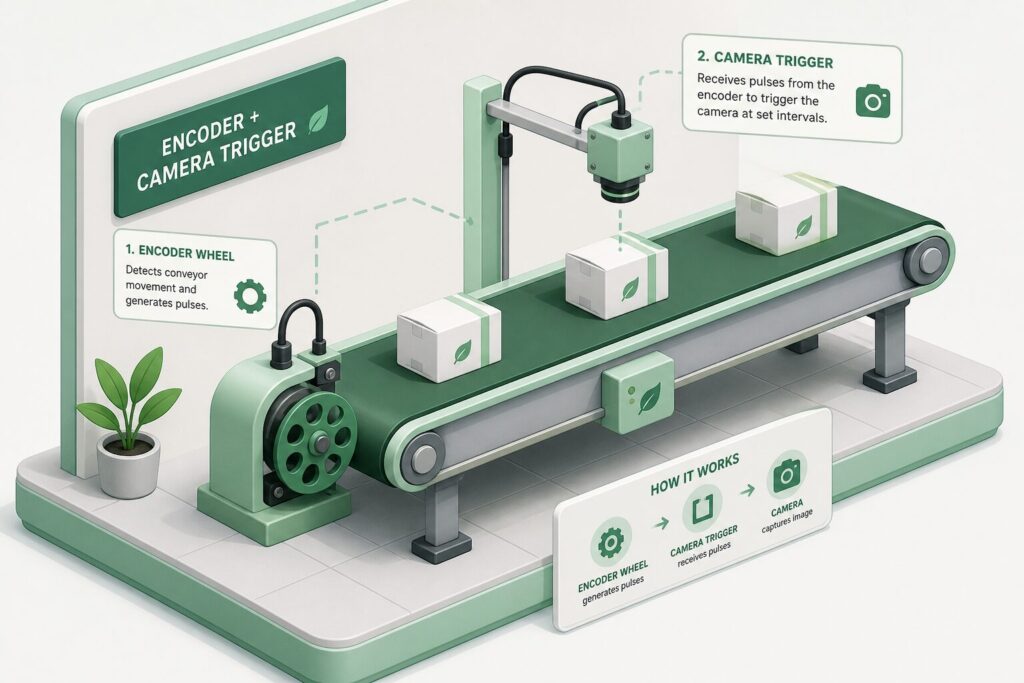
Conveyor camera triggering and encoder beats a “frame every 80 ms” guess. When belt speed changes, a fixed delay looks at the wrong product and reject hits the neighbour. Encoder pulses move the product in millimetres: trigger, strobe and reject share one counter.
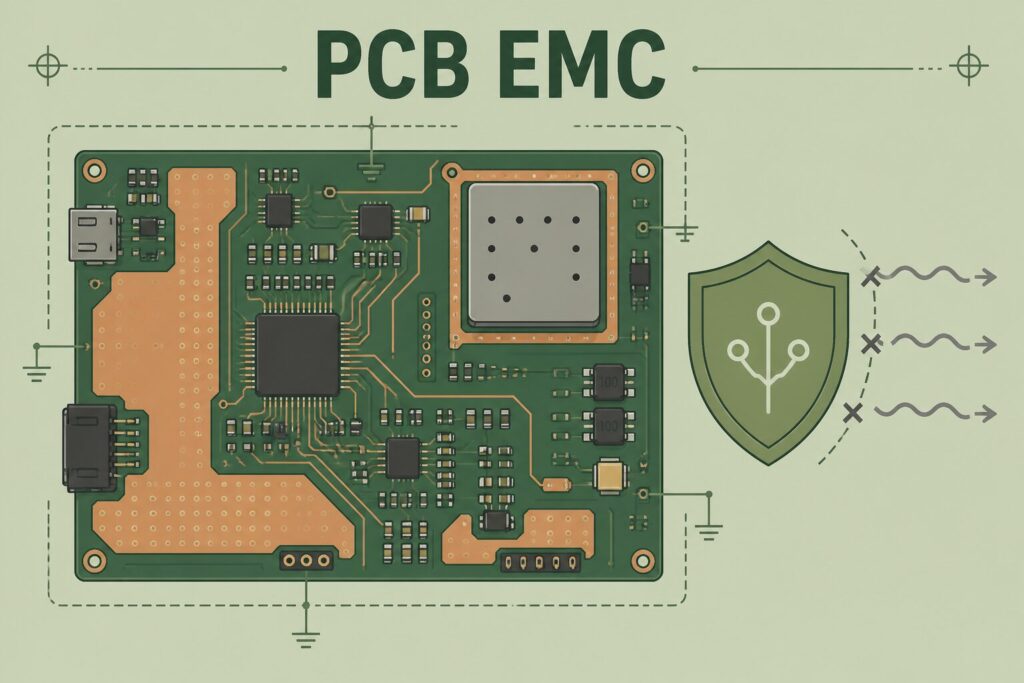
The board and I/O sit under machine vision. Light sync must share the millisecond with industrial camera lighting selection.
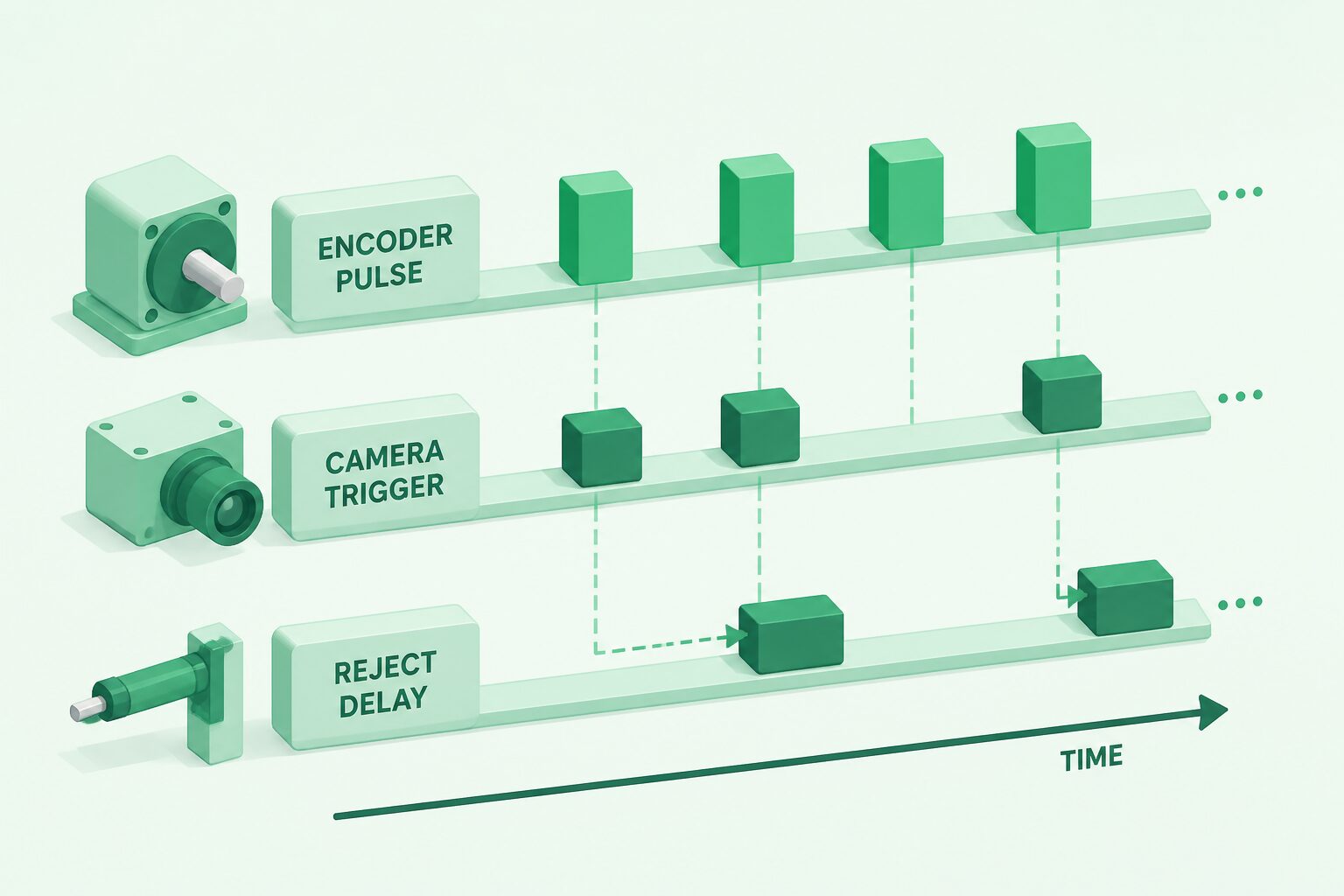
Conveyor Camera Triggering and Encoder — how it works
The line encoder turns shaft or roller rotation into counts. The industrial camera fires when the product enters the trigger window — position, not time. The ROI can stay fixed in space; what moves is trigger time.
A VFD speed change shifts software delays. A photocell only says “present”, not the offset to the centre. Gaps and double products raise wrong frames. That feeds false alarms in industrial vision: the algorithm is right, the frame is on the wrong part.
Problem context
Fixed pitch can reset on a Z index. Random pitch needs a photocell plus encoder offset. Without a direction bit, bounce double-fires the counter. At high speed a missing strobe blurs the frame; trigger can be right and the decision still fails.
Technical analysis
The PCB needs A/B (and Z) inputs, a counter and a compare unit. Trigger offset is calibrated to product length; reject delay is a second count window. Debounce and direction stop double fires on bounce. Pulse/mm mechanical resolution comes before software offset; roller slip is not “fixed in code”.
Wikipedia — machine vision is a usable outer frame; the line difference is trigger and reject in the same counter domain.
Field scenarios
- Fixed pitch: reset on Z index
- Random pitch: photocell plus encoder offset
- High speed: strobe, short exposure
- Reverse: freeze the counter on direction bit
- Variable length: two offsets (leading / trailing edge)
Solution approach
Mechanical resolution (pulse/mm) first, then software offset. Free-running the camera breaks the line rhythm. On Revan camera PCBs, trigger and reject share the same counter domain. Calibration is writing the offset in millimetres on a known-length reference part.
Gains
Conveyor camera triggering and encoder cuts wrong frames and neighbour rejects; calibration survives speed changes. The operator updates the offset instead of asking to “slow the camera”.
Field note
Lines that say “a photocell is enough” complain as soon as speed rises. Encoder cost is lower than one shift of bad rejects.
Results
Conveyor camera triggering and encoder locks frame and reject to millimetres. Time estimates fail first when belt speed changes.
🔗 Get in touch with us:
Phone/WhatsApp: +41 76 212 8248
📧 E-Mail: info@revantechnology.ch
For detailed information about our services in electronics development & PCB design:
Revan Technology – Your partner for professional electronics and PCB development