Our customer needed an industrial weighing indicator and Modbus interface board for a filling and packaging line: a compact measurement card that reads the load cell reliably, shows weight to the operator locally and delivers net weight to the PLC over RS-485/Modbus. The existing setup was fragmented — a separate indicator, a separate converter and extra cabling — so calibration drifted from shift to shift.
The expectation was not a set of modules spread across another cabinet. Amplification, filtering, display drive and industrial communication had to sit on one board so the weighing point could stay embedded in the machine cycle.
In short: “Measure the load cell locally; manage gross/net and tare; send weight to the PLC over Modbus; show it on an LCD at the machine.”

Revan Technology treated the industrial weighing indicator and Modbus interface board as one architecture covering measurement, display and fieldbus. The load-cell differential input is amplified and filtered on the board; the microcontroller produces gross/net, tare and threshold decisions locally. Valid weight is exposed as Modbus RTU registers to the PLC or SCADA over RS-485.
The goal was not a decorative scale screen, but a durable measurement interface card that feeds dosing or packaging decisions on the line.
A low-noise differential preamplifier, reference source and multi-sample ADC for the load-cell bridge share one board. Power and signal zones are separated; the 24 V line supply is stepped down for logic. Conformal coating, screw mounting and pluggable terminals suit a vibrating machine cabinet. A shielded load-cell input with common-mode rejection is treated as mandatory against neighbouring VFD/servo noise.
Sample rate follows line tempo; a moving average and hysteresis raise a “stable weight” flag. Two-point (zero/span) or known-mass field calibration is done from the HMI menu. Tare stores the gross value; net weight feeds dosing or packaging logic. Overload and open-sensor detection write distinct fault codes so the PLC never treats a bad reading as a valid weighment.
An isolated half-duplex RS-485 driver leaves the board. The Modbus map exposes live weight, stability bit, tare state, target threshold and the last fault code. The PLC can read weight and drive a dosing valve or reject in its own cycle while the board keeps measurement integrity. Unit, filter depth, slave address and baud are set from the LCD menu. A hold mode and calibration lock prevent unauthorised span changes during maintenance.
After commissioning, weighing moved from a “separate indicator + analogue cable” arrangement into a measurable machine input.
This project demonstrates Revan Technology’s custom PCB, embedded measurement and industrial communication capabilities on dosing and packaging lines. If you have a similar load-cell + Modbus need, we can scope the project together.
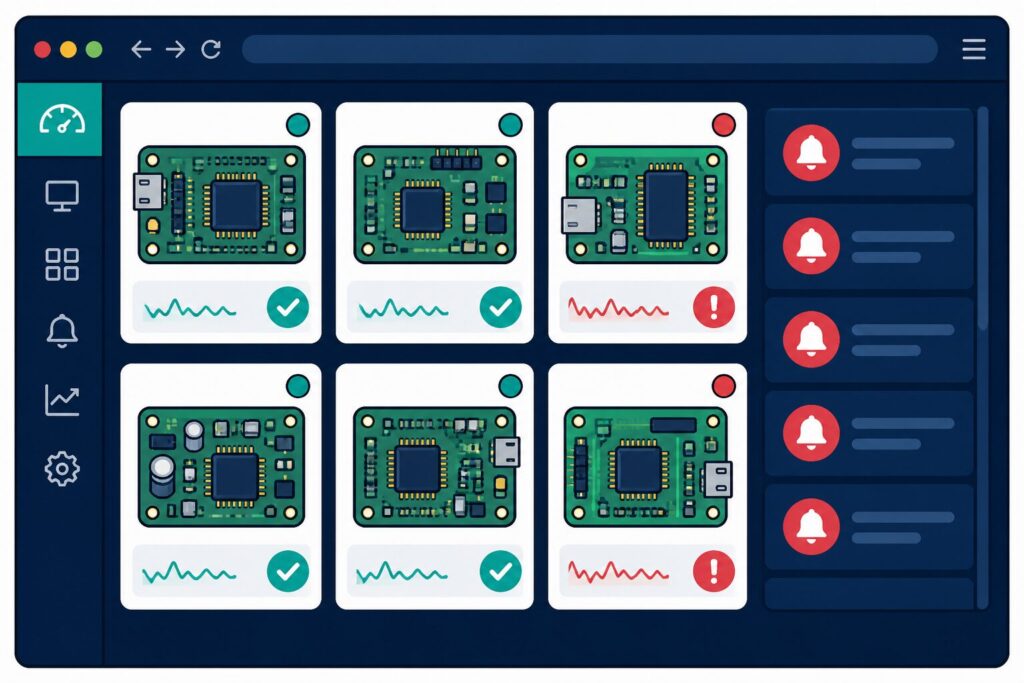
For customer confidentiality, company and product names are omitted. Images are representative and illustrate the functional structure.
🔗 Get in touch with us:
Phone/WhatsApp: +41 76 212 8248
📧 E-Mail: info@revantechnology.ch
For detailed information about our services in electronics development & PCB design:
Revan Technology – Your partner for professional electronics and PCB development