Our customer requested a packaging line servo axis control board to synchronise the pusher and feeder movements of a machine processing several product sizes. In the existing arrangement, mechanical stops and timing relays had to be readjusted during every product change. At higher speeds, small timing deviations between product detection and axis motion could cause packages to jam or reach the next station in the wrong position.
The requirement involved more than moving a servo motor forwards and backwards. The board had to track the main conveyor speed, process the photoelectric sensor signal reliably, generate the correct motion profile for the selected product recipe and present the servo drive status to the operator in a clear form.
In short, the customer needed a compact control board that placed product detection and mechanical motion on the same position reference, converted format changes into recipes and provided the service team with unambiguous diagnostic information.

Rather than redesigning the servo power stage, Revan Technology developed a dedicated axis control board that operates between an industrial servo drive and the machine peripherals. The board reads the main conveyor encoder, product photoelectric sensor and machine permissives to establish a position reference for every product. It then sends the calculated acceleration, constant-speed and deceleration profile to the servo drive via a pulse-and-direction interface.
Stroke, start offset, speed, acceleration and return position are stored together in each product recipe. When the operator selects a format on the HMI, the parameters are loaded in a controlled manner and values outside the approved limits are rejected. A validated recipe therefore replaces adjustments to potentiometers or timing relays during product changes.
The solution was designed as a machine-specific controller that combines sensors, servo drive, HMI and line cadence within one application, rather than as a generic motion module added to the packaging machine.
The control board was designed for the machine’s 24 VDC supply. Photoelectric sensor, reference sensor, forward and reverse limits, servo-ready and drive-fault signals enter through protected, isolated inputs. Servo enable, brake and auxiliary pneumatic valve outputs are controlled through suitable driver stages. The PCB includes reverse-polarity, transient-voltage and communication-line protection, as well as removable industrial terminals for field wiring.
Emergency-stop and guard-door circuits were not delegated to the control software. An external safety relay interrupts the servo torque permissive in hardware, while the control board only monitors the safety-chain state so that it can stop the cycle and show the cause to the operator.
The differential signal from the main conveyor encoder is processed by a receiver circuit suitable for an electrically noisy industrial environment. When the product sensor is triggered, the board adds the recipe offset to the encoder count to determine the axis cycle’s starting position. It generates a trapezoidal velocity profile within the defined stroke, speed and acceleration limits. If a cycle cannot finish before the next product arrives, no new movement is started and the machine performs a controlled stop.
Referencing uses a reduced speed, sensor validation and a defined maximum search distance. Limit inputs remain active during both normal movement and manual service mode. If the axis position cannot be trusted after a power interruption, the system requires a new referencing cycle before automatic production resumes.
The operator panel connects to the control board over RS-485/Modbus RTU. HMI screens show the selected recipe, current conveyor speed, axis state, cycle count and active fault. Access levels allow operators to select formats while maintenance personnel can edit speed and offset values within approved limits.
Parameters are stored in non-volatile memory with a version identifier and validation value. If HMI communication is lost, the board completes the current safe cycle but does not initiate a new automatic cycle. The event log allows drive faults, limit violations, missing products and cycle timeouts to be reviewed separately during servicing.
Following commissioning, packaging format changes were performed using stored motion recipes instead of separate mechanical and timing adjustments. Conveyor-referenced synchronisation maintained the relationship between product detection and axis movement even as line speed changed.
This project combines Revan Technology’s custom PCB design, embedded motion control and machine automation experience in a compact product that supports repeatable packaging production with a lower risk of downtime.
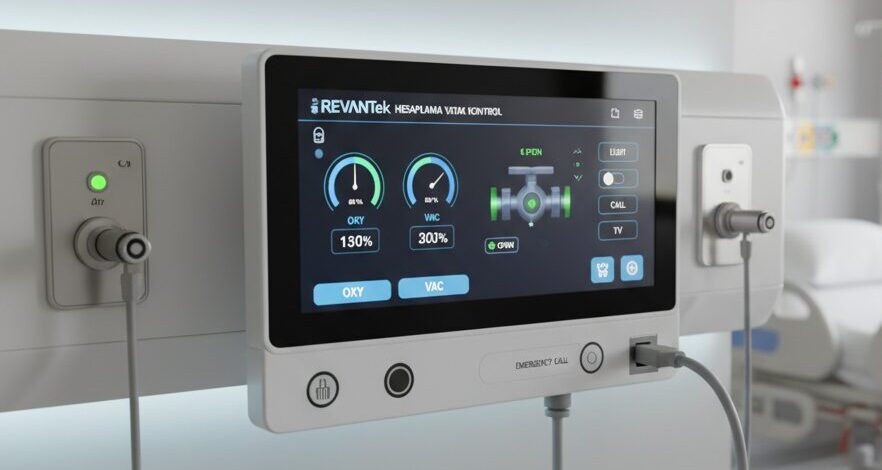
For customer confidentiality, the company name, machine model and product names are omitted. Images are representative and illustrate the functional structure.
🔗 Get in touch with us:
Phone/WhatsApp: +41 76 212 8248
📧 E-Mail: info@revantechnology.ch
For detailed information about our services in electronics development & PCB design:
Revan Technology – Your partner for professional electronics and PCB development